Popular Now







Most horror games try to scare you with what you can see. Zoonomaly does almost the opposite. It scares you with what you can’t confirm, and that’s why the fear lingers long after the first monster encounter.
After spending enough hours replaying different sections, experimenting with routes instead of rushing objectives, something becomes obvious. The monsters aren’t the biggest source of stress. They’re simply the trigger. The real horror comes from uncertainty, anticipation, and the constant feeling that every decision could be the wrong one.
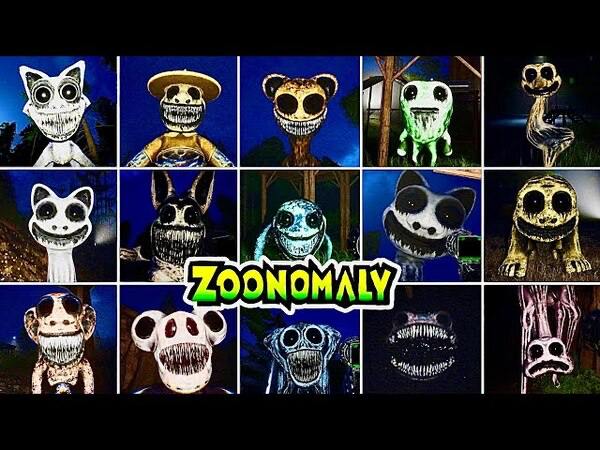
That design choice is what separates Zoonomaly from many indie horror titles. Instead of throwing jump scares every few minutes, it builds tension slowly until even opening an ordinary door feels like a calculated risk.
If you’ve already wondered why your heartbeat spikes before a monster even appears, you’re experiencing exactly what the developers intended.
Why Zoonomaly Feels Scarier Than It Looks
Zoonomaly creates psychological pressure instead of relying on nonstop jump scares, and that’s why many players describe it as “more stressful than scary.”
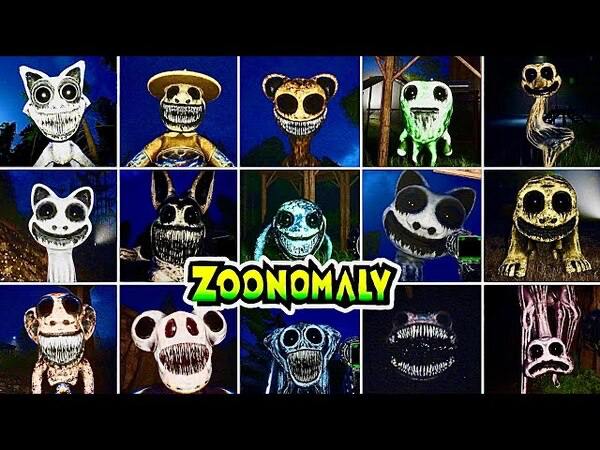
Look at the monsters objectively. Most of them aren’t particularly graphic or disturbing compared to creatures from classic survival horror games. The environments aren’t constantly drenched in blood, and the game doesn’t bombard you with cinematic scares every few minutes.
Yet players still slow their movement.
They stop talking during co-op sessions.
They hesitate before opening doors.
That reaction isn’t caused by the monster models themselves.
It’s caused by uncertainty.
Many horror games show the danger first, then ask you to react.
Zoonomaly often reverses that process. It gives you just enough information to suspect danger without ever confirming where it is. Your brain naturally begins filling in the missing pieces, and imagination is usually far more effective than any scripted horror sequence.
One moment from an early playthrough still stands out. A completely empty hallway stretched ahead with almost no environmental detail. Nothing moved. No monster appeared. No music played.
Instead of feeling relieved, the hallway felt wrong.
The silence lasted long enough that every step became uncomfortable. By the time a monster finally entered the area, the tension had already reached its peak.
The monster didn’t create the fear.
It simply released it.
That’s an important distinction because it explains why the game continues feeling tense even after you become familiar with its mechanics.
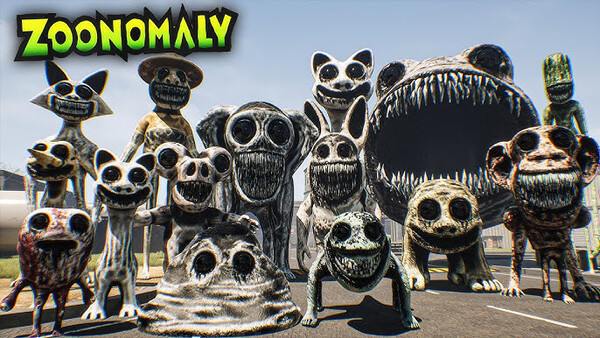
Players looking deeper into how enemy behavior contributes to that feeling should also read Monster Detection Explained, where detection mechanics reveal why uncertainty is deliberately built into every encounter.
What Makes This Different From Typical Horror Games?
Many indie horror games follow a recognizable rhythm.
Explore.
Get a loud jump scare.
Run away.
Repeat.
That formula certainly works, but it becomes predictable after a while.
Zoonomaly builds fear differently by making ordinary exploration feel dangerous.
Instead of asking, “When will the next monster appear?”
You’re constantly wondering:
- Is it already nearby?
- Am I walking into its patrol route?
- Should I solve this puzzle now or wait?
- Is this room actually safe?
Those questions never fully disappear.
Even after learning the map, the uncertainty simply changes form.
The Fear of Not Knowing
The strongest emotion in Zoonomaly isn’t fear of monsters. It’s fear of missing information.
Human brains naturally dislike uncertainty.
When information is incomplete, the mind starts creating possibilities.
Most of those possibilities are worse than reality.
That’s exactly why horror works.
Imagine hearing footsteps somewhere beyond a doorway.
If you immediately see the monster, the situation becomes simple.
Run.
Hide.
Escape.
But if you hear something without confirmation, your brain starts asking dozens of questions.
Was that really a monster?
Is it moving closer?
Did it hear me?
Should I wait?
Should I leave?
Every unanswered question adds another layer of tension.
The interesting part is that none of those questions require an actual monster on screen.
The fear exists before the encounter even begins.
Uncertainty Is More Powerful Than Monsters
Players often remember the moments before danger more vividly than the chase itself.
Think about the last time you entered a large room after solving several puzzles.
The room looked empty.
Nothing happened.
Instead of relaxing, most players slow down instinctively.
They check corners.
They rotate the camera more often.
They stop sprinting.
Those aren’t conscious decisions.
They’re psychological responses to uncertainty.
Once the monster appears, many players actually feel a strange sense of relief.
Finally, there’s something concrete to react to.
The unknown has become known.
That’s one reason the buildup often feels scarier than the chase.
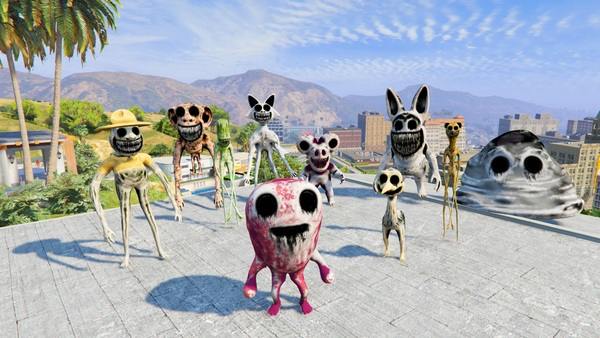
Why Hidden Threats Feel Worse
Visible danger allows planning.
Invisible danger forces guessing.
Guessing consumes mental energy.
That’s why long periods without seeing a monster can become surprisingly exhausting.
The game quietly encourages your imagination to work overtime.
It never explicitly tells you a monster is nearby.
Instead, it provides subtle hints.
A distant sound.
A suspicious corridor.
A room with too many hiding places.
A strangely empty hallway.
Each clue is harmless by itself.
Together, they convince your brain that something is wrong.
This design philosophy also explains why players who understand monster behavior don’t necessarily stop feeling nervous.
Understanding the rules removes confusion.
It doesn’t remove anticipation.
How Your Brain Fills the Gaps
One fascinating aspect of Zoonomaly is how often the player becomes their own worst enemy.
After enough time, every shadow starts looking suspicious.
Every unfamiliar sound becomes important.
Every long hallway feels dangerous before there’s any evidence that it actually is.
Psychologists sometimes describe this as predictive processing. The brain constantly builds expectations about what might happen next instead of waiting for complete information.
Horror games take advantage of that system exceptionally well.
Zoonomaly rarely says, “A monster is coming.”
Instead, it encourages your brain to imagine that one could be.
Ironically, that imagined possibility often feels more intense than the encounter itself.
The result is a game that doesn’t simply scare players.
It keeps them mentally engaged every second they’re exploring.
How Sound Creates Constant Anxiety
The audio design is one of the biggest reasons Zoonomaly remains tense even during moments when almost nothing is happening.
Many horror games use loud orchestral music or sudden sound effects to announce danger.
Zoonomaly trusts silence instead.
That confidence makes every small sound feel important.
A faint footstep.
A distant movement.
An unexpected environmental noise.
None of them are particularly frightening on their own.
Together, they force players to constantly question what they’re hearing.
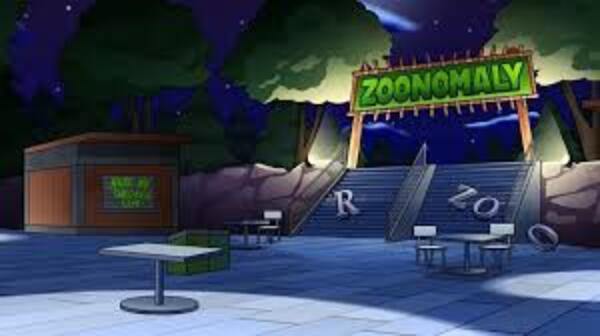
Silence Is Part of the Horror
Silence isn’t the absence of sound.
It’s a psychological tool.
When background music disappears, your attention naturally shifts toward tiny environmental details.
Every creaking floor.
Every echo.
Every subtle movement suddenly feels significant.
During several replay sessions, there were moments where nothing actually happened for nearly a full minute.
Oddly enough, those were often the most stressful parts of the game.
Without music telling you how to feel, your imagination takes over.
That’s much harder to predict than any scripted scare.
Small Audio Cues Change Player Behavior
One quiet sound can completely alter a player’s route.
Instead of continuing forward, they stop.
They look around.
They reconsider.
They delay solving a puzzle.
Even if the sound wasn’t directly connected to a monster, it successfully changed player behavior.
That’s clever psychological design.
Rather than forcing fear through visuals, the game allows players to create much of that tension themselves.
It’s also why playing with headphones dramatically changes the experience.
Directional audio becomes another source of information, but never enough information to remove uncertainty entirely.
The balance between knowledge and doubt is carefully maintained throughout the game.
As players spend more time understanding how enemy behavior works, they begin replacing panic with observation. That doesn’t make Zoonomaly less frightening. Instead, it transforms fear into something much more interesting: respect for a horror game that understands suspense is built long before the monster enters the room.
Puzzle Solving Makes Horror Stronger
One of Zoonomaly’s smartest design choices is that it never lets your brain focus on just one task. You’re rarely asked to simply survive or simply solve a puzzle. Instead, the game quietly forces both challenges together, and that’s where the real tension begins.
Many horror games pause the action while you work through a puzzle. Once you close the inventory or finish the lock combination, the danger returns. Zoonomaly refuses to give you that comfort. Every second spent thinking about a solution is another second your surroundings can change.
That’s why even relatively simple puzzles feel much harder than they actually are.
Your Brain Can Only Process So Much at Once
The puzzle itself usually isn’t difficult.
The environment makes it difficult.
Imagine standing in front of a locked mechanism. You’re trying to remember symbols, search nearby objects, and decide which item belongs where. At exactly the same time, another part of your brain is listening for footsteps, checking doorways, watching corners, and wondering whether the monster has changed its patrol.
Neither task is overwhelming by itself.
Together, they overload your attention.
Psychologists call this cognitive load, where several mental tasks compete for the same limited resources. Zoonomaly takes advantage of that limitation extremely well.
This also explains why many players solve the exact same puzzle much faster during a second playthrough. It isn’t because the puzzle suddenly became easier. It’s because they already know what to expect, leaving more mental capacity to monitor danger.
Decision Fatigue Is the Hidden Enemy
The game quietly asks you to make dozens of small decisions every few minutes.
Should you enter that room?
Should you wait?
Should you grab the item now?
Should you continue solving the puzzle or retreat?
None of those choices feel particularly important on their own.
After twenty minutes, however, your brain becomes tired from making constant judgments.
That fatigue is exactly when mistakes begin.
Many failed runs don’t end because players don’t know the correct answer to a puzzle.
They end because someone becomes impatient.
Instead of waiting another ten seconds, they convince themselves they’ll “finish quickly.”
Veteran players recognize that feeling almost immediately.
Ironically, the moment you start wanting to rush is usually the moment you should slow down.
Multitasking Creates the Horror
One memorable section highlighted this perfectly.
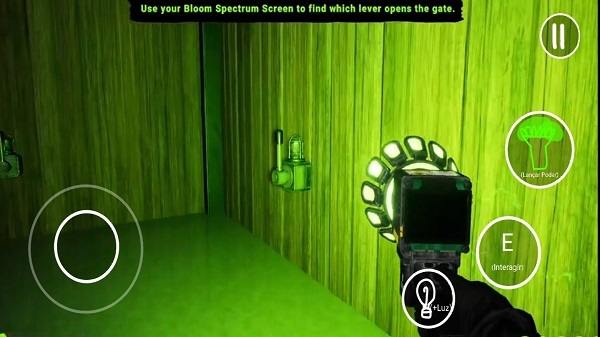
The puzzle wasn’t complicated, but the surrounding area offered very little visibility. Every few seconds it felt necessary to stop interacting with the objective just to check nearby entrances again.
Nothing happened for nearly a minute.
That silence became more stressful than the puzzle itself.
By the time the solution was complete, the relief didn’t come from solving it.
It came from finally being able to move again.
That’s clever design.
The puzzle wasn’t creating fear directly.
It simply forced enough mental investment that every possible interruption felt dangerous.
Players struggling with specific objectives can find detailed solutions in Puzzle Guide and Solutions, but understanding why puzzles feel stressful often makes them easier than simply memorizing answers.
The Psychology Behind Monster Encounters
Monsters become frightening long before they begin chasing you.
The encounter usually starts inside your head, not on your screen.
One reason experienced players still enjoy Zoonomaly after multiple playthroughs is that enemy encounters remain psychologically engaging even after most surprises disappear.
The monsters don’t rely on scripted scares.
They rely on uncertainty.
Delayed Threat Is More Effective Than Immediate Danger
Imagine two situations.
In the first, a monster immediately bursts through a door.
You react.
You run.
The moment ends.
In the second, you hear movement somewhere nearby.
Nothing appears.
Ten seconds pass.
Still nothing.
Now every doorway becomes suspicious.
Every corner deserves another look.
Your own imagination begins creating possible scenarios before the game commits to one.
That waiting period is often more stressful than the chase itself.
Delayed threats force players to participate in creating the horror instead of simply reacting to it.
Predictable Yet Unpredictable AI
At first glance, monster behavior appears inconsistent.
Play long enough, though, and patterns begin to emerge.
Patrols repeat.
Investigations follow recognizable logic.
Search behavior starts making sense.
That’s where Zoonomaly becomes particularly interesting.
The AI isn’t completely random.
It’s just unpredictable enough that players never feel entirely comfortable.
Good horror depends on uncertainty, not chaos.
If enemies behaved randomly every time, the experience would feel unfair.
If they behaved identically every encounter, the fear would disappear.
Zoonomaly sits surprisingly close to the middle.
Understanding those patterns is exactly why Monster AI Really Works becomes such an important companion article after finishing this one.
Fear of Being Observed
Perhaps the strongest psychological trick in the game is making players feel watched.
Whether the monster is actually nearby becomes almost irrelevant.
The possibility alone changes behavior.
Players naturally begin avoiding open spaces.
They rotate the camera more frequently.
They hesitate before crossing intersections.
What’s fascinating is that those habits often continue even after the monster has already left.
The brain doesn’t instantly switch back into a relaxed state.
Instead, it remains prepared for another encounter.
That’s remarkably similar to how real anxiety works.
The perceived possibility of danger changes behavior even without immediate evidence.
Very few horror games sustain that feeling for extended periods.
Why Players Panic Even Before a Chase Starts
Panic usually begins before the monster arrives.
The chase simply exposes emotions that were already building.
Many players assume they panic because they’re being chased.
After enough experience, it becomes obvious that the panic actually starts much earlier.
It begins with anticipation.
Anticipation Is Stronger Than Surprise
A jump scare lasts seconds.
Anticipation can last several minutes.
Walking through an unfamiliar hallway with absolutely no information often feels more uncomfortable than escaping a monster you’ve already identified.
Your brain starts preparing for danger long before danger actually exists.
Every small sound becomes evidence.
Every shadow becomes suspicious.
That’s why players often describe Zoonomaly as “constantly stressful” rather than “constantly scary.”
The tension rarely disappears completely.
It simply rises and falls throughout the experience.
False Safety Is One of the Game’s Best Tricks
The safest-looking rooms often become the most dangerous.
Not because monsters magically appear there.
Because players relax.
After solving several puzzles without interruption, it’s natural to believe the next room will also be safe.
Attention drops.
Movement speeds up.
Corners receive less attention.
The monster doesn’t need to become smarter.
The player simply becomes less careful.
Some of the most memorable encounters happen immediately after those quiet moments because the contrast amplifies the shock.
Experienced players eventually learn that silence isn’t reassurance.
It’s another test of discipline.
Loss Aversion Changes Every Decision
The longer you survive, the more valuable your progress becomes.
After collecting several important items and solving multiple objectives, dying suddenly feels much more expensive.
Psychologists call this loss aversion.
People generally fear losing progress more than they enjoy making new progress.
Zoonomaly quietly uses that principle throughout the game.
Early mistakes feel frustrating.
Late mistakes feel devastating.
That’s why players often become increasingly cautious as a run continues.
Ironically, that caution sometimes helps them survive.
Other times it creates hesitation that leads to even bigger mistakes.
Finding the balance between confidence and patience becomes part of mastering the game.
Tunnel Vision During Stress
Another fascinating behavior appears during difficult encounters.
Players stop seeing the whole environment.
Instead, they focus entirely on one threat.
The monster fills the screen.
Nearby cover is ignored.
Alternative escape routes disappear from attention.
Puzzle objectives are forgotten.
This phenomenon, often called tunnel vision, affects nearly everyone under pressure.
The best players aren’t immune to it.
They’ve simply built routines that reduce its impact.
Before entering a dangerous area, they already know where they’ll retreat.
Before solving a puzzle, they already know where the nearest cover is.
Before opening a door, they’ve already considered what happens if something is waiting on the other side.
Those preparations don’t eliminate fear.
They reduce the number of decisions that must be made while fear is at its highest.
That’s one reason experienced players often look calm during encounters that completely overwhelm newcomers.
They’re making fewer emergency decisions because most of the important ones were made before the monster ever appeared.
How the Environment Builds Tension
The environment is arguably the most effective “monster” in Zoonomaly.
That might sound strange at first because the maps themselves don’t constantly throw enemies at you. In fact, many areas are surprisingly empty. Yet those quiet spaces are exactly what make exploration exhausting. The level design keeps feeding your brain just enough uncertainty that you never feel completely comfortable.
After several playthroughs, the layouts stop feeling like collections of rooms and corridors. They start feeling like psychological tools. Every hallway, doorway, and corner exists to influence how confidently you’re willing to move.
That’s why the game remains tense even when absolutely nothing is happening.
Empty Spaces Feel Less Safe Than Crowded Ones
Conventional wisdom says open areas should feel safer because you can see farther.
Zoonomaly often proves the opposite.
A large empty room creates dozens of unanswered questions.
Where is the monster?
How long have I been exposed?
Did something just move near that doorway?
Should I cross now or wait?
Because there are fewer visual details to focus on, your attention naturally shifts toward potential danger. Ironically, the lack of information becomes information itself.
During one late-game section, there was almost nothing inside the room except a few pieces of furniture and several exits. No monster appeared for nearly half a minute.
It was still one of the most uncomfortable moments in the game.
Not because anything happened.
Because it felt like something should happen.
That’s excellent environmental design.
Room Layout Quietly Controls Your Decisions
Most players believe they’re choosing where to go.
Often, the map has already influenced that decision.
Long hallways encourage speed.
Tight corners encourage caution.
Multiple doorways create hesitation because every option feels equally risky.
Small puzzle rooms trap your attention while reducing awareness of the surrounding environment.
The game rarely forces behavior directly.
Instead, it gently nudges you toward making mistakes.
One detail that’s easy to miss is how often objectives are placed where visibility becomes limited. You’re encouraged to focus on solving a problem at exactly the moment your awareness should remain at its highest.
That combination creates much of the game’s tension without requiring a single scripted event.
Environmental Storytelling Makes the World Feel Alive
Not every frightening moment comes from gameplay.
Sometimes the environment tells its own story.
Abandoned areas, damaged structures, unusual object placement, and subtle visual clues suggest that something happened long before the player arrived.
The game rarely explains those details through dialogue.
Instead, it trusts players to notice them naturally.
That approach works because imagination fills the gaps more effectively than exposition.
Rather than explaining every mystery, the world quietly asks questions.
Why is this room abandoned?
Who left these objects here?
Why does this area feel different from the last one?
Players interested in those hidden narrative details will probably enjoy Story & Lore Explained, where the environmental clues connect surprisingly well with the broader themes behind Zoonomaly.
Why Experienced Players Still Feel Nervous
Understanding the game doesn’t eliminate fear.
It simply changes the reason you’re afraid.
Many newcomers assume experienced players eventually stop feeling tense because they know the maps and monster behavior.
The opposite is often true.
Knowledge replaces confusion, but it doesn’t remove uncertainty.
Experience Changes Fear Into Respect
Early in the game, fear usually comes from surprise.
Later, it comes from probability.
Experienced players recognize dangerous situations much earlier than beginners.
They know which hallway often leads into patrol routes.
They recognize when silence has lasted a little too long.
They notice subtle changes in pacing.
Instead of wondering whether danger exists, they’re calculating how likely it is.
Oddly enough, that awareness can create even more tension.
You’re no longer afraid because you don’t know what’s happening.
You’re afraid because you know exactly what could happen.
Prediction Creates Its Own Pressure
The better you understand monster behavior, the more responsibility every decision carries.
Choosing the wrong doorway no longer feels like bad luck.
Ignoring a patrol pattern becomes a conscious mistake.
Trying to finish one last puzzle before leaving becomes a calculated risk.
That shift changes the emotional experience completely.
Beginners panic because they lack information.
Veterans become cautious because they have enough information to recognize genuine danger.
It’s a much subtler form of horror, and one that keeps the game engaging well beyond the first playthrough.
Confidence Can Become Another Trap
Perhaps the biggest lesson after multiple runs is that confidence deserves as much attention as fear.
The most dangerous mindset isn’t panic.
It’s overconfidence.
Many unnecessary deaths happen after players convince themselves they’ve mastered the game.
They stop checking corners.
They stop listening.
They assume the patrol will follow the same route as last time.
Then one small mistake forces an entire chase.
Respecting the game keeps players alive much longer than believing they’ve solved it.
What Zoonomaly Does Better Than Many Indie Horror Games
Zoonomaly succeeds because it trusts the player instead of constantly trying to shock them.
That’s becoming surprisingly rare in modern indie horror.
Many games chase instant reactions through loud audio cues, scripted jump scares, or enemies that appear with little warning. Those moments work the first time, but they’re difficult to replay because the surprise disappears.
Zoonomaly takes a slower approach.
The fear comes from systems interacting with one another.
The monster AI.
The level design.
The soundscape.
The puzzles.
The uncertainty.
None of those elements are extraordinary by themselves.
Together, they create something much more memorable.
Fear Comes From Systems, Not Scripts
One reason repeat playthroughs remain enjoyable is that encounters don’t always unfold exactly the same way.
The game doesn’t rely entirely on predetermined cinematic moments.
Instead, the tension emerges from the interaction between your decisions and the game’s mechanics.
Enter a room too early.
Take too long solving a puzzle.
Ignore a suspicious sound.
Each choice subtly changes the emotional experience.
That makes every successful escape feel earned rather than scripted.
It’s also why players often remember individual situations instead of specific jump scares.
They remember the hallway where they almost made a mistake.
The room where they hesitated too long.
The puzzle they solved while constantly checking the doorway.
Those stories become personal because the player helped create them.
The Game Lets Players Create Their Own Horror
Perhaps the smartest design decision is knowing when not to scare the player.
Silence is allowed to linger.
Empty rooms stay empty.
Monsters don’t constantly interrupt exploration.
That restraint encourages players to fill the silence with their own expectations.
The result is surprisingly effective.
A hallway becomes frightening because you expect something to happen.
A puzzle becomes stressful because you’re imagining an interruption.
An unopened door becomes intimidating because your imagination keeps offering possibilities.
Very little of that requires scripted horror.
The player is doing much of the work.
That’s one reason Zoonomaly continues appearing in discussions about underrated psychological horror experiences despite having far fewer cinematic moments than many bigger-budget games.
If you’re still deciding whether it’s worth your time, Zoonomaly Review explores how these psychological systems come together and why the game stands out among recent indie horror releases.
Ultimately, Zoonomaly proves that memorable horror doesn’t always come from making players scream. Sometimes it comes from making them hesitate before opening a perfectly ordinary door. That hesitation is difficult to design, difficult to maintain across an entire game, and exactly what gives Zoonomaly its unique identity.