Popular Now










Most players who search for “Zoonomaly detection range” are asking the wrong question, and that’s exactly why they keep getting caught. Monsters don’t simply aggro because you stepped one meter too close. Their behavior feels unpredictable at first because several systems overlap at the same time. Distance matters, but so do your movement, your timing, the room layout, and what the AI is currently trying to do.
After spending dozens of runs experimenting instead of immediately solving every puzzle, one pattern became obvious. Players who survive consistently aren’t necessarily faster or better at hiding. They understand how the monsters “think.” Once that clicks, Zoonomaly becomes less about reacting to jump scares and more about reading invisible rules.

If you’re still learning the basics of surviving each encounter, Best Survival Tips covers general movement habits before diving into the AI itself.
How Monster Detection Actually Works
Understanding detection mechanics is far more valuable than memorizing a single safe distance. Once you know what information the AI reacts to, you’ll start predicting danger before the chase even begins instead of scrambling after it’s already too late.
Many horror games rely on simple trigger zones where crossing an invisible line instantly alerts an enemy. Zoonomaly feels different because the monsters create the illusion that they’re constantly making decisions. That illusion is what makes encounters so tense.
Detection Is More Than Simple Distance
The biggest misconception is believing every monster has a fixed detection radius.
Imagine walking through a hallway twice. The first time, nothing happens. The second time, the exact same hallway suddenly turns into a chase. It’s tempting to assume the game is random, but repeated testing suggests that’s usually not what’s happening.
Detection is better understood as a combination of several variables rather than a single circle around the monster.
| Detection Factor | Impact on Detection | Why It Matters |
|---|---|---|
| Distance | High | Closer players are naturally easier to notice. |
| Line of sight | Very High | Clear visibility dramatically increases detection. |
| Player movement | High | Moving targets are easier for the AI to recognize. |
| Environment | Medium | Corners, walls, furniture, and doors interrupt vision. |
| Monster state | Very High | Patrolling monsters behave differently from alerted ones. |
Table 1. Core factors that influence monster detection in Zoonomaly.
Note: These factors describe observable gameplay behavior rather than officially published AI values.
This explains why standing ten feet away behind a wall often feels completely safe, while sprinting across an open hallway from even farther away immediately creates trouble.
Vision, Sound, and Movement Work Together
The smartest way to think about monster detection is as overlapping layers rather than independent systems.
Vision tells the monster where you are.
Movement makes you easier to notice.
Your position determines whether you have enough cover.
Instead of asking, “How close can I get?” experienced players usually ask, “How much information am I giving the monster?”
That shift completely changes how you approach exploration.
One interesting habit that develops after several hours is slowing down before entering large rooms. Not because walking is magically quieter, but because entering carefully gives you time to gather information before the AI gathers information about you.
Large open spaces punish rushed decisions more than almost any puzzle in the game.
Why Players Think Detection Is Random
Detection only feels random when players can’t see the decision-making process happening underneath.
A common situation looks like this:
The first attempt goes smoothly.
The second attempt ends almost instantly.
The third attempt somehow becomes easy again.
That inconsistency creates the impression that monsters simply “decide” to chase whenever they want.
In reality, tiny differences usually exist.
Maybe the camera exposed your character for another second.
Maybe you crossed the hallway before the patrol turned last time.
Maybe you entered while the monster was already investigating another location.
Those tiny differences become huge once the AI changes state.
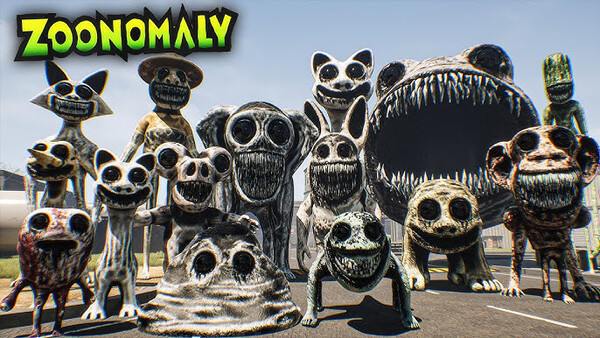
That’s also why every monster develops a different reputation within the community. Some feel relentless, while others appear surprisingly forgiving. Those personalities become much easier to understand after reading Every Monster Explained, where each creature’s behavior is broken down individually.
Before moving on, remember one simple principle:
Distance starts the conversation with the AI, but vision, movement, and timing decide how that conversation ends.
The Five Stages of Monster Detection
Monster encounters rarely jump straight from calm exploration to full-speed pursuit. Most chases build through recognizable stages, and learning those transitions is one of the biggest improvements any player can make.
Once these stages become familiar, you’ll start escaping before the monster officially knows where you are.
Passive Patrol
This is the safest state you’ll ever encounter.
The monster follows its normal route without actively searching for anything unusual. Many new players panic the moment they see an enemy, but this is actually the best opportunity to observe.
Watching patrol timing for twenty seconds often saves two minutes of running later.
Veteran players spend surprisingly little time moving and far more time gathering information.
Suspicion
Suspicion is the invisible warning that many players completely miss.
The monster hasn’t confirmed your position yet, but something has interrupted its routine.
Its movement may hesitate.
Its direction may change.
Its attention appears focused somewhere unexpected.
This is usually your last chance to leave quietly.
The mistake most beginners make is assuming nothing has happened simply because the chase music hasn’t started.
Investigation
Investigation is where panic starts ruining otherwise safe situations.
The monster now has a reason to inspect a specific location but still doesn’t know exactly where you are.
Many players immediately sprint away, accidentally confirming their position.
Ironically, staying patient for a few seconds is often the safer decision.
During several puzzle sections, waiting behind cover while the monster completed its search proved far more reliable than trying to outrun it through unfamiliar corridors.
Good horror games reward patience more often than speed, and Zoonomaly follows that philosophy surprisingly well.
Full Detection
This is the moment every player recognizes.
The AI has enough confidence to commit.
Hesitation disappears.
Its behavior becomes aggressive.
Your objective immediately changes from exploration to survival.
At this stage, trying to finish a nearby puzzle or grab one last collectible almost never ends well.
Experienced players accept the failed opportunity and focus entirely on creating distance before thinking about objectives again.
Active Chase
Once the chase begins, your previous mistakes matter less than your next decision.
Running without a destination is one of the fastest ways to corner yourself.
Players who survive consistently usually already know where they’re heading before they start moving.
That’s why successful runs often look calm from the outside. The player isn’t reacting faster. They’re reacting earlier.
The biggest lesson from repeated play sessions is surprisingly simple: the best chase is the one that never fully starts.
What Increases Your Detection Chance?
Most deaths happen long before the monster actually catches you. The real mistake is usually made twenty or thirty seconds earlier through a series of small decisions that quietly increase your visibility.
Changing those habits has a much bigger impact than memorizing every patrol route.
Running vs. Walking
Running isn’t automatically wrong.
Running without a reason is.
Many players spend entire levels sprinting because fear convinces them that faster movement equals safety. In reality, constant sprinting reduces the amount of information you collect while increasing the chance of stumbling into danger.
Walking also creates more opportunities to notice patrol patterns before committing to a route.
The fastest players often move slower than beginners.
That sounds contradictory until you’ve watched experienced speedrunners clear areas almost effortlessly.
Standing in Open Areas
Open rooms remove your biggest advantage: uncertainty.
Hallways, furniture, walls, and door frames constantly interrupt sightlines.
Large rooms don’t.
Whenever possible, move between pieces of cover instead of treating an open floor like a straight race to the exit.
One overlooked habit is pausing just inside a doorway instead of immediately crossing the room.
Those extra two seconds often reveal an entire patrol cycle.
Breaking Line of Sight Too Late
Many players wait until the monster is almost facing them before trying to hide.
By then, the decision may already be too late.
Breaking vision early is usually far more effective than escaping at the last possible second.
Think of hiding as preventing confirmation rather than escaping after confirmation.
That small mental shift changes nearly every encounter.
Poor Camera Control
Camera movement rarely gets discussed, yet it indirectly causes countless mistakes.
Players spinning the camera wildly tend to lose track of exits, forget nearby cover, and accidentally run back toward danger.
Calmer camera movement improves environmental awareness, which naturally reduces detection opportunities.
It isn’t a mechanical buff.
It’s simply better decision-making.
Entering Unknown Rooms Too Quickly
Curiosity kills more runs than monsters do.
Walking into every unexplored room at full speed is one of the easiest ways to interrupt an active patrol.
Taking one second to scan the entrance dramatically lowers that risk.
It’s a habit shared by experienced horror players across dozens of games, not just Zoonomaly.
If repeated failures still feel mysterious, it’s worth checking Common Beginner Mistakes, where many of these habits appear in different forms and quietly sabotage otherwise good runs.
The important takeaway is straightforward. Monsters become dangerous because players unknowingly provide too much information. Reduce the information you reveal, and the AI becomes far easier to predict, even without knowing its exact detection numbers.
What Does NOT Affect Detection?
Knowing what doesn’t matter is just as valuable as understanding what does. Many players spend their entire playthrough avoiding imaginary mechanics while completely ignoring the ones that actually influence monster behavior.
One reason Zoonomaly creates so much tension is that the game rarely explains its systems outright. That leaves plenty of room for assumptions, and horror communities are famous for turning assumptions into “facts.” After watching discussions, speedruns, and plenty of failed attempts, several myths show up again and again.
Common Myths That Refuse to Die
Some ideas sound believable simply because they make intuitive sense.
Players often assume crouching makes them invisible because that’s how stealth works in many other games.
Others believe monsters can only detect movement in front of them.
Some even think waiting long enough automatically resets every encounter.
None of those habits should become your core survival strategy without understanding the situation around them.
The problem with myths isn’t that they’re always completely false. The problem is that they’re only partially true, which makes them unreliable when the pressure starts building.
Things Players Often Misunderstand
One interesting pattern appears after watching newer players.
Whenever they’re caught unexpectedly, they immediately blame the last thing they did.
“I opened the door.”
“I looked at the monster.”
“I stood still.”
In reality, the mistake often happened much earlier.
Perhaps they entered the room while the patrol cycle was already changing.
Perhaps they crossed an open space that left them exposed for several seconds.
Perhaps they ignored the monster’s suspicious behavior and continued solving a puzzle.
The final mistake simply becomes the easiest one to remember.
Experienced players almost never analyze the moment they died.
Instead, they ask what decision thirty seconds earlier created the impossible situation.
That small difference in mindset speeds up improvement far more than memorizing individual encounters.
What Actually Matters Most
If every mechanic carried the same weight, Zoonomaly would feel random. Fortunately, that’s not how the game plays.
The most reliable indicators are surprisingly consistent.
| Player Action | Usually Helps | Usually Hurts |
|---|---|---|
| Watching patrol routes | ✔ | |
| Moving between cover | ✔ | |
| Entering unknown rooms carefully | ✔ | |
| Standing in open spaces | ✔ | |
| Panicking during investigation | ✔ | |
| Ignoring monster behavior | ✔ | |
| Planning escape routes early | ✔ | |
| Solving puzzles while exposed | ✔ |
Table 2. Habits that generally improve or reduce survivability.
Note: Results may vary depending on monster type and encounter design, but these patterns remain consistent across most play sessions.
The takeaway is refreshingly simple.
Instead of obsessing over hidden statistics, spend your attention reading the room. Zoonomaly rewards awareness far more than mechanical precision.
How to Reduce Detection Range
You can’t completely eliminate the chance of being detected, but you can dramatically reduce how often monsters gather enough information to commit to a chase.
The biggest improvement usually comes from changing your habits rather than finding secret tricks.
Control Your Movement Instead of Your Speed
Many players confuse slow movement with safe movement.
They’re not the same thing.
Walking directly into an exposed hallway is still dangerous.
Running across a protected corridor you’ve already cleared may actually be the safer choice.
Good movement isn’t measured by speed.
It’s measured by intention.
One habit that noticeably improved survival was treating every doorway as an observation point instead of an entrance.
Pausing for two or three seconds feels painfully slow during the first few hours.
After several successful runs, those pauses become automatic because they prevent far more mistakes than they cost in time.
Use Obstacles the Way the Level Designers Intended
Walls do much more than block your path.
They limit information.
Every corner creates uncertainty for both the player and the monster.
That’s why experienced players naturally move from cover to cover instead of following the shortest route.
Furniture, pillars, shelves, broken walls, and even awkward room layouts become tools rather than obstacles.
One memorable puzzle room looked almost impossible during the first visit.
After replaying it later, it became obvious the environment itself was quietly showing the safest route through its placement of cover.
Good horror level design teaches without speaking.
Zoonomaly does this more often than people realize.
Learn Patrol Timing Instead of Fighting It
Trying to outrun every patrol eventually leads to mistakes.
Learning its rhythm is much easier.
Most monsters feel intimidating because players constantly react after the AI has already changed direction.
Watching one complete patrol cycle reveals far more information than rushing into the unknown.
This is also where many speedrunners surprise newer players.
They don’t skip observation.
They simply become incredibly efficient at it.
A five-second pause can easily save thirty seconds of panic later.
Observe Before You Commit
Every room asks the same question.
“Do you really know what’s waiting inside?”
The worst deaths often happen because curiosity wins over patience.
Before stepping into an unfamiliar area, quickly check:
- Where is the nearest cover?
- Which direction can you retreat?
- Is the monster already moving?
- Can you complete your objective without crossing open ground?
These questions take only a moment, yet they prevent many encounters from happening in the first place.
If you’re still building those habits, Best Survival Tips expands on positioning, resource management, and exploration strategies that naturally complement everything discussed here.
Reducing detection isn’t about becoming invisible.
It’s about making fewer decisions that force the monster to notice you.
What Happens After a Monster Detects You?
Being detected doesn’t automatically mean the run is over. Most failed chases happen because players assume they’ve already lost and start making desperate decisions.
The moment detection occurs, the game shifts from stealth to decision-making.
How a Chase Actually Begins
A chase rarely starts at maximum intensity.
There’s usually a brief window where both you and the monster are adjusting.
The monster confirms your location.
You evaluate your surroundings.
The environment suddenly matters more than speed.
One common mistake is immediately turning around and running the way you came.
That path often contains dead ends, unfinished puzzles, or areas you’ve already proven aren’t safe.
Instead, experienced players usually head toward routes they mentally prepared several rooms earlier.
Preparation wins more chases than reflexes.
Can Detection Be Reset?
Yes, but not as quickly as many players hope.
Breaking visual contact doesn’t necessarily erase the monster’s awareness.
Think of detection like a conversation.
Once the monster has enough evidence to believe you’re nearby, it doesn’t instantly forget everything because you disappeared behind a wall for one second.
That’s why repeatedly peeking around the same corner usually ends badly.
Instead, focus on creating uncertainty.
Changing direction, increasing the distance between you and the patrol, and using multiple pieces of cover generally work better than hiding in the nearest spot.
How Monsters Lose Track of You
The easiest way to lose a monster is to stop behaving predictably.
Many players run in straight lines because fear narrows their focus.
Monsters, however, often benefit when your movement becomes obvious.
Breaking sightlines, using room layouts intelligently, and avoiding unnecessary backtracking force the AI to search rather than simply follow.
This is another reason experienced players spend so much time learning maps.
They’re not memorizing every hallway.
They’re memorizing opportunities to disappear.

If escaping specific monster encounters is still your biggest challenge, How to Escape Every Monster explores individual survival strategies that build on these universal detection mechanics.
When Is It Actually Safe to Move Again?
Patience becomes surprisingly valuable after escaping.
Many players survive the initial chase only to get caught again within seconds because they assume silence means safety.
Instead of rushing back toward the objective, watch for signs that the monster has genuinely resumed its routine.
Look for predictable movement.
Notice whether patrol patterns have stabilized.
Only then should exploration continue.
The safest players rarely hurry after surviving danger.
They reset mentally before resetting the objective.
That final pause often separates a successful run from another frustrating restart.
Advanced Detection Tips Most Players Learn Too Late
The biggest jump in survival doesn’t come from faster reactions. It comes from realizing that detection is a system you can manipulate instead of a random punishment.
Most players spend their first few hours asking, “How do I avoid monsters?” Veterans eventually start asking a different question: “How do I make monsters search the wrong place?” That shift completely changes how you approach every area.
Use the Map to Control the Monster Instead of Escaping It
Running away is only one option.
Sometimes the better play is to influence where the monster wants to investigate.
Large rooms with multiple exits naturally create uncertainty for enemy patrols. Long hallways do the opposite because they remove your options. If you immediately sprint down the only available corridor after being spotted, you’re actually making the AI’s job easier.
Experienced players often take a slightly longer route if it breaks the monster’s prediction. It feels counterintuitive at first, but creating uncertainty is usually more valuable than creating distance.
That’s why players who know every shortcut don’t always survive longer than players who understand every escape route.
Every Puzzle Has a Hidden Safety Window
One mistake almost everyone makes is interacting with objectives the moment they find them.
In Zoonomaly, the puzzle itself is rarely the dangerous part.
The timing is.
Take a few seconds to observe nearby patrol patterns before touching an objective. Those few seconds often reveal whether the monster is moving away, circling back, or about to enter your room.
Many failed puzzle attempts happen because players force progress instead of waiting for a safer opportunity.
Oddly enough, slowing down usually finishes the game faster.

If puzzle rooms keep turning into chase sequences, Puzzle Guide and Solutions explains how to approach objectives while minimizing unnecessary encounters.
Don’t Memorize Locations. Memorize Safe Decisions.
Many guides encourage memorizing maps.
That’s useful.
Memorizing decisions is even better.
For example:
| Situation | Average Player Response | Experienced Player Response |
|---|---|---|
| Unknown hallway | Walk forward immediately | Pause and gather information |
| Monster disappears | Continue objective instantly | Wait for patrol confirmation |
| Dead end discovered | Panic and turn around | Already knows the backup route |
| Loud encounter | Sprint without direction | Move toward planned cover |
| Multiple exits | Pick the closest one | Pick the safest one |
Table 3. Decision-making habits that consistently improve survival.
The map changes very little.
Your decisions determine whether those rooms become safe or dangerous.
Mistakes That Increase Detection More Than Players Realize
Most detection isn’t caused by bad luck.
It’s caused by repeating small mistakes that slowly build into an unavoidable encounter.
The frustrating part is that these mistakes rarely look serious on their own.
Treating Every Quiet Room as Safe
Silence creates false confidence.
After several minutes without seeing a monster, players naturally lower their guard. They stop checking corners, rush objectives, and forget where the nearest escape path is.
Ironically, many surprise encounters happen immediately after long periods of calm.
Good horror games deliberately use quiet moments to encourage risky behavior.
Zoonomaly understands this trick remarkably well.
Playing Too Fast After Escaping
Escaping feels like success.
Mentally, players relax.
Mechanically, the danger often hasn’t disappeared yet.
One habit worth developing is resetting your pace after every chase.
Look around.
Listen.
Identify where the patrol resumed.
Only then continue exploring.
This simple routine prevents many of the “I escaped just to die ten seconds later” moments that frustrate newer players.
Assuming Every Monster Behaves the Same Way
This is another common trap.
Players master one encounter and expect identical rules everywhere else.
Different monsters create different pressure.
Some encourage constant movement.
Others punish careless positioning.
Others simply demand more patience.
Once you start recognizing individual behavior instead of treating every encounter as generic stealth, survival becomes much more consistent.

If you’re still figuring out how each creature behaves differently, Complete Monster Guide is the natural next step because it breaks down individual enemy behavior rather than detection mechanics alone.
Detection Checklist Before Entering Any New Area
The safest players aren’t constantly reacting.
They’re constantly preparing.
Before opening a door or entering an unfamiliar section, mentally run through a quick checklist.
- Have I seen the monster’s latest patrol?
- Where is my closest escape route?
- Which objects provide cover?
- Is this objective worth attempting right now?
- What happens if the monster appears behind me?
- Can I leave the room without crossing open space?
This entire process takes less than five seconds after enough practice.
Those five seconds often save several minutes of repeating an encounter.
The game never rewards reckless speed.
It consistently rewards informed decisions.
Final Thoughts
Monster detection in Zoonomaly feels mysterious during the first playthrough because the game intentionally withholds information. After enough experience, though, a pattern becomes obvious: monsters don’t simply appear out of nowhere and catch players at random.
Nearly every detection happens because the player unknowingly gave away information through poor positioning, predictable movement, impatience, or lack of planning.
Once you stop thinking about “stealth” as hiding and start thinking about it as information management, the entire game becomes easier to read. You won’t avoid every chase, and you shouldn’t expect to. Horror games are at their best when something eventually goes wrong.
The goal isn’t perfect invisibility.
The goal is making smart enough decisions that monsters have fewer opportunities to find you in the first place.
Frequently Asked Questions
Does crouching reduce monster detection range in Zoonomaly?
Not by itself. Crouching may help you move more carefully depending on the situation, but it should never be treated as a guaranteed stealth mechanic. Positioning and timing matter much more.
Can monsters detect players through walls?
In most situations, walls interrupt direct information gathering, but players shouldn’t assume every wall provides complete safety. Waiting too close to predictable patrol routes can still create dangerous situations.
Does sprinting always attract monsters?
Running becomes risky when it exposes you at the wrong time or in open spaces. Sprinting itself isn’t automatically a mistake, especially when escaping or crossing already-safe areas.
Is detection range the same for every monster?
No. Different monsters create different types of pressure, so their behavior shouldn’t be approached with one universal strategy.
Why do experienced players seem harder to detect?
They usually make fewer predictable decisions. Instead of relying on faster reflexes, they constantly observe patrols, plan escape routes, and avoid unnecessary exposure.
Why do monsters suddenly find me after several quiet minutes?
Quiet sections often encourage players to become careless. Most surprise detections happen because awareness drops, not because the AI suddenly becomes more aggressive.
Should I wait or keep moving during patrols?
Neither option is always correct. The better choice depends on patrol timing, room layout, and whether moving creates more information for the monster.
Why do I survive one chase but die immediately afterward?
Many players rush back to their objective too quickly. Waiting for patrols to stabilize before moving again greatly improves survival.
What’s the fastest way to reduce detection overall?
Improve decision-making instead of reaction speed. Learning when to move is usually more valuable than learning how fast to move.
How can I tell if an area is safe?
No area is permanently safe. Treat every room as temporarily safe until you understand the current patrol pattern.
Is memorizing the map enough to avoid monsters?
No. Map knowledge helps, but understanding patrol timing and making better decisions has a much larger impact on long-term survival.
What’s the biggest mistake beginners make?
Trying to solve objectives immediately after finding them. The safest players spend a few seconds observing their surroundings before committing to any action.
What Separates Good Players From Great Players
The difference isn’t mechanical skill.
It’s the ability to stay disciplined when the game tries to make you panic.
After dozens of hours, one pattern becomes impossible to ignore. Players who consistently survive aren’t necessarily faster, nor do they memorize every corner of the map. They simply stop making emotional decisions.
Most failed runs begin with a perfectly reasonable choice.
“I’ll just grab this item quickly.”
“I’ve got enough distance.”
“The monster probably went somewhere else.”
Those assumptions are exactly what the game punishes.
Veteran players rarely assume anything. They confirm before committing. That habit slows the pace by only a few seconds, but over an entire playthrough it prevents countless unnecessary deaths.
Ironically, playing cautiously often results in faster completions because fewer mistakes mean fewer repeated sections.
Read the Monster Before You Read the Room
The environment matters, but enemy behavior matters more.
Many new players spend their time memorizing rooms, hallways, and puzzle locations. Experienced players memorize patterns instead.
Questions worth asking include:
- Where did the monster come from last time?
- How long did it search before leaving?
- Did it investigate sound or simply patrol?
- Which escape routes consistently remain available?
Once those questions become automatic, every encounter feels more manageable.
The room hasn’t changed.
Your understanding of it has.
If you’re trying to improve overall survival rather than solving one specific encounter, Zoonomaly Beginner Tips provides a broader foundation that complements everything covered here.
Why Panic Creates More Deaths Than the Monster
The monster usually isn’t what kills the run.
Panic is.
There’s a moment in nearly every chase where players abandon their plan and start improvising. They forget which doors are locked, run into unfamiliar hallways, or repeatedly circle the same obstacle.
Those decisions happen within seconds.
The surprising part is that they’re almost always avoidable.
A useful habit developed after many playthroughs is mentally choosing an escape direction before entering any dangerous room. Most of the time that plan isn’t needed, but when things suddenly go wrong, the decision has already been made.
That removes hesitation.
And hesitation is one of the biggest advantages the monster has over the player.
The Best Stealth Strategy Is Staying Predictable to Yourself
Many stealth games reward creativity.
Zoonomaly rewards consistency.
Having a personal routine before entering each area dramatically reduces mistakes.
A simple example looks like this:
| Step | Purpose | Result |
|---|---|---|
| Scan the room | Identify exits and cover | Better positioning |
| Listen for movement | Estimate patrol distance | Fewer surprise encounters |
| Plan an exit | Remove panic decisions | Faster reactions |
| Complete the objective | Stay focused | Less unnecessary exposure |
| Leave immediately | Avoid overstaying | Lower detection risk |
Table 4. A repeatable exploration routine used by experienced players.
This routine isn’t exciting.
It is, however, remarkably effective.
The more often it’s repeated, the fewer situations spiral out of control.
Common Advice That Doesn’t Actually Help
Some tips become popular simply because they’re repeated often.
Unfortunately, they’re not always useful.
One example is the advice to “always hide.”
Hiding has its place, but remaining hidden without understanding patrol behavior can waste valuable time or even trap you in worse positions.
Another common suggestion is to sprint away every time the monster appears.
Sometimes that’s exactly the right move.
Sometimes it leads directly into a dead end.
Good decisions depend on context, not universal rules.
The strongest players don’t memorize fixed strategies.
They understand why a strategy works.
Once you understand the reason, adapting becomes much easier than copying someone else’s route.
Building Better Habits Over Multiple Playthroughs
Improvement in Zoonomaly happens gradually.
The first playthrough teaches the map.
The second teaches enemy behavior.
The third teaches patience.
Everything after that becomes refinement.
Players often notice that later runs feel dramatically easier even though the monsters haven’t changed. What’s actually changed is the amount of information they’re collecting before making each decision.
That’s why experienced players appear calm.
They aren’t reacting less.
They’re simply reacting earlier.
If your goal is mastering every system the game offers instead of only surviving, Complete Zoonomaly Walkthrough ties together puzzles, exploration routes, monster encounters, and progression into one complete guide.
Final Verdict
Monster detection in Zoonomaly isn’t designed to be unfair. It only feels unpredictable until you recognize the logic behind enemy behavior.
The game quietly rewards patience, observation, and planning while punishing rushed decisions that seem harmless in the moment. That design creates a learning curve that feels intimidating early on but becomes deeply satisfying once everything starts clicking together.
Looking back after multiple playthroughs, the biggest improvement rarely comes from sharper reflexes. It comes from making fewer unnecessary decisions. Every avoided risk means one less opportunity for the monster to gain information, one less chase to survive, and one step closer to finishing the game cleanly.
Mastering detection is ultimately less about hiding from monsters and more about controlling the information they receive. Once you understand that principle, every hallway, puzzle room, and encounter becomes easier to read, and the tension shifts from feeling unfair to feeling earned.
That moment is when Zoonomaly transforms from a frustrating horror game into an exceptionally well-designed survival experience.