Popular Now






Introduction
Free Fire Max isn’t a difficult game because of its gunplay. It’s difficult because it throws dozens of mechanics, menus, characters, and decisions at new players before they even understand how a match works. If you’re losing your first fights, dying immediately after landing, or wondering why everyone seems to hit impossible headshots, you’re not alone. This guide focuses on the fundamentals that actually matter. Instead of overwhelming you with every feature in the game, we’ll show you what deserves your attention first and what can safely wait until later.
One thing that surprises many new players is how quickly bad habits become permanent. Spending your first few hours looting every building, standing still while shooting, or ignoring the safe zone might not seem like a big deal, but those habits become much harder to fix once you start playing Ranked. Learning the right approach from the beginning saves dozens of hours later.

This guide is written for players who want to improve naturally rather than memorize complicated strategies. Think of it as advice from someone who’s already made every beginner mistake imaginable, from chasing unnecessary kills to carrying three sniper rifles because they “looked powerful.”
By the end of this guide, you’ll understand how a typical match flows, which mechanics deserve your attention first, and what to learn next as you become more comfortable with the game.
What Makes Free Fire Max Different?
Free Fire Max looks like another battle royale on the surface, but it plays very differently from games like PUBG, Call of Duty: Mobile, or Apex Legends Mobile. The biggest adjustment isn’t your aim. It’s learning the pace of the game.
Matches move much faster than many newcomers expect. Within a minute of landing, you may already hear nearby gunfire, see the safe zone shrinking, or encounter another squad pushing aggressively. Waiting too long to make decisions often gets you eliminated before you’ve had a chance to enjoy the match.
Unlike slower battle royale games where careful positioning can carry average aim, Free Fire Max rewards quick decision-making just as much as mechanical skill.
Every Match Is Built Around Constant Decisions
Winning isn’t about finding legendary loot first.
It’s about making dozens of small decisions correctly.
For example:
- Should you land in a busy city or a quieter area?
- Is it worth chasing that gunfight?
- Should you revive a teammate or rotate into the next safe zone?
- Is your current weapon good enough, or should you risk looting another building?
Experienced players rarely have perfect equipment. What separates them is that they spend less time hesitating.
One pattern becomes obvious after enough matches. New players often lose because they’re still deciding what to do while experienced players have already acted.
Graphics May Look Better, But Gameplay Comes First
Many people discover Free Fire Max because of its upgraded visuals. Character models are cleaner, environments contain more detail, and weapon animations feel noticeably smoother than the original version.
Those improvements certainly make the game more enjoyable, but they don’t change the core gameplay.
A player using medium graphics with good positioning will almost always outperform someone running Ultra graphics while making poor decisions.
That’s why experienced players usually spend more time adjusting their controls than admiring visual effects.
Later in this guide, we’ll explain how to optimize your settings for both performance and visibility.
Internal Link Placement
→ Best Graphics Settings for Free Fire Max
Character Skills Change Every Fight
One of the biggest differences compared to many shooters is the character system.
Every character comes with a unique ability that can influence combat, movement, healing, defense, or support. Some abilities activate manually, while others work automatically in the background.
For beginners, this creates a common misconception.
Many assume they need to unlock expensive characters before they can compete.
That simply isn’t true.
Character abilities provide advantages, but they don’t replace good positioning or smart decision-making. A player with basic starter characters who understands rotations will often outperform someone using the latest premium character without understanding the fundamentals.
Think of characters as tools rather than shortcuts.
You’ll eventually learn which abilities fit your preferred playstyle, but during your first week, learning how to survive matters far more than choosing the “perfect” character.
Internal Link Placement
→ Best Characters for Beginners
Gunfights Are Faster Than You Expect
Free Fire Max has one of the fastest average time-to-kill values among mobile battle royale games.
Once bullets start landing, fights are often decided in just a few seconds.
That changes how you should approach combat.
Many new players react after taking damage.
Experienced players prepare before damage happens.
That means:
- Keeping cover nearby.
- Avoiding open fields whenever possible.
- Reloading before entering buildings.
- Watching the minimap while moving.
- Expecting another squad after hearing gunfire.
One lesson becomes painfully obvious after enough matches.
The first enemy you see is rarely the biggest threat.
Quite often, another player is already watching both of you from a nearby rooftop or hillside, waiting for the fight to end before cleaning up the survivor.
Understanding this changes how aggressively you should chase kills.
Gloo Walls Are More Important Than Perfect Aim
Ask experienced players what saved them most often, and many won’t mention a weapon.
They’ll mention the Gloo Wall.
New players frequently treat it as emergency equipment.
Veteran players treat it as part of every engagement.
A well-placed Gloo Wall can:
| Situation | How a Gloo Wall Helps |
|---|---|
| Crossing open ground | Creates instant cover |
| Healing | Blocks enemy fire long enough to recover |
| Reviving teammates | Protects both players during the revive |
| Escaping | Breaks the enemy’s line of sight |
| Final circles | Creates temporary defensive positions |
Table 1. Common situations where Gloo Walls provide the biggest advantage.
Note: Carrying multiple Gloo Walls is often more valuable than carrying extra ammunition, especially in Ranked matches.
This isn’t something most players realize during their first few games.
Many beginners leave matches with hundreds of unused bullets but wish they had one more piece of cover during the final circle.
The Game Rewards Smart Survival More Than High Kill Counts
There’s an assumption that winning requires eliminating half the lobby.
It doesn’t.
One of the easiest ways to spot an experienced player is by watching how they avoid unnecessary fights.
If a battle offers little reward but high risk, they’ll simply leave.
That might sound boring, but battle royale games are ultimately about surviving longer than everyone else.
Some of the cleanest victories come from players who only fought three or four meaningful battles during the entire match.
Every unnecessary fight consumes something valuable:
- Ammunition
- Armor durability
- Healing items
- Gloo Walls
- Time before the next safe zone
Those resources become increasingly important as the match progresses.
Learning when not to fight is just as valuable as learning how to shoot.
There’s a Bigger Learning Curve Than Most Players Expect
Free Fire Max looks approachable because matches are short and the controls are simple.
The deeper systems take much longer to master.
Besides aiming, you’ll gradually learn:
| Skill | Why It Matters |
|---|---|
| Landing strategy | Determines your early-game survival |
| Loot efficiency | Helps you gear up before enemies do |
| Map awareness | Prevents surprise attacks |
| Rotation timing | Keeps you ahead of the shrinking safe zone |
| Positioning | Reduces unnecessary fights |
| Team coordination | Increases survival in Squad mode |
Table 2. Core skills that influence long-term improvement more than raw aim.
Notice something interesting.
Only one of these skills is directly related to shooting.
That’s why experienced players often outperform mechanically gifted newcomers. They simply spend less time making avoidable mistakes.
If you focus on learning these fundamentals first, every new weapon, character, or future update becomes much easier to understand.
The next step is preparing your account before jumping into serious matches. A few minutes spent adjusting controls, sensitivity, and graphics can make the game feel completely different, especially during your first week.
Internal Link Placement
At the end of this section, naturally introduce these supporting guides:
- Best HUD Layout for Free Fire Max
- Best Sensitivity Settings for Free Fire Max
- Best Graphics Settings for Low-End Devices
What Should You Do Before Playing Your First Match?
The best preparation happens before you ever jump out of the plane.
Most beginners launch their first match immediately, leave every setting at default, and assume they’ll figure things out as they play. Technically, you can. In practice, you’ll spend the next ten matches fighting the controls as much as your opponents.
Taking ten minutes to configure your account properly makes the first few hours far less frustrating. The goal isn’t to copy a professional player’s setup. It’s to build a setup that feels comfortable enough that you stop thinking about your controls and start paying attention to the battlefield.
Adjust Your Controls Before They Become Muscle Memory
Your HUD determines how quickly you react under pressure.
Many new players leave every button exactly where the game places it. That works for casual matches, but once fights become faster, reaching awkward buttons costs precious time.
The default layout isn’t “bad.” It’s simply designed to fit as many players as possible. Your hands, however, aren’t average.
A common example appears during close-range fights. Beginners often need to stop moving for a split second just to tap the fire button comfortably. Experienced players rarely do. Their thumbs already know where every important button is without looking.
When adjusting your HUD, prioritize comfort over complexity.

Focus on these essentials:
- Keep movement and aiming unobstructed.
- Make the fire button easy to reach without stretching.
- Place healing items where they won’t be tapped accidentally.
- Leave enough space around utility buttons like the Gloo Wall.
Avoid copying advanced four-finger or six-finger layouts on your first day. They look impressive in YouTube videos, but they often create more confusion than improvement for new players.
A simple two-thumb layout that feels natural is much better than a complicated setup you can’t use consistently.
Internal Link Placement
→ Best HUD Layout for Free Fire Max
Find a Sensitivity That Works for You
Sensitivity settings receive far more attention than they deserve.
Many beginners search for “best sensitivity” hoping someone else’s numbers will magically improve their aim.
Unfortunately, there isn’t a universal answer.
The best sensitivity is the one you can control consistently.
Higher sensitivity allows faster turns and quicker headshot flicks, but it also makes aiming less stable. Lower sensitivity offers smoother tracking but can feel sluggish when enemies appear unexpectedly.
Think of it like steering a car.
A steering wheel that’s too sensitive feels unstable.
One that’s too stiff makes every turn slower.
The sweet spot sits somewhere in the middle.
A good habit is to enter the training ground before your first real match.
Spend five or ten minutes practicing:
- Tracking moving targets.
- Controlling recoil.
- Switching between weapons.
- Throwing Gloo Walls quickly.
- Adjusting aim after sprinting.
Those few minutes usually improve your first real game far more than watching another highlight montage.
Internal Link Placement
→ Best Sensitivity Settings for Free Fire Max
Prioritize Performance Over Visual Quality
Free Fire Max looks fantastic on high-end devices.
Dynamic lighting, sharper textures, and smoother animations make the battlefield feel more immersive.
None of those features matter if your frame rate keeps dropping during fights.
Stable performance wins more matches than beautiful graphics.
Many experienced players intentionally lower certain visual settings because consistent FPS makes enemy movement easier to track.
If your phone struggles during combat, consider lowering:
| Setting | Recommended Priority |
|---|---|
| Frame Rate | Highest |
| Shadow Quality | Low |
| Effects | Medium or Low |
| Texture Quality | Medium |
| Resolution | Based on device performance |
Table 3. Graphics settings that usually have the biggest impact on performance.
Note: Every device behaves differently. Test changes one at a time instead of lowering every setting immediately.
A smooth 60 FPS experience with medium graphics is usually more enjoyable than unstable Ultra graphics.
Internal Link Placement
→ Best Graphics Settings for Free Fire Max
Don’t Worry About Unlocking Everything Immediately
The home screen can feel overwhelming.
Events.
Characters.
Pets.
Weapon skins.
Guilds.
Lucky Royale.
Collections.
Bundles.
Season Pass.
It’s easy to think you’re already behind.
You’re not.
Most of these systems exist to expand the game over hundreds of hours, not during your first afternoon.
One mistake many beginners make is spending every free resource immediately because they’re afraid they’ll miss something valuable.
Patience pays off.
Play enough matches to understand your preferred playstyle first.
Do you enjoy aggressive close-range fights?
Do you prefer supporting teammates?
Would you rather survive until the final circle?
The answers should guide future purchases.
There’s no reason to buy a character designed for aggressive rushing if you naturally prefer careful positioning.
You’ll make much smarter decisions after twenty matches than after two.
Learn the Interface Instead of Ignoring It
Free Fire Max provides a surprising amount of useful information.
The minimap warns about nearby gunfire.
The safe zone timer tells you when to rotate.
Sound indicators reveal footsteps.
Team status shows who needs help.
Inventory icons indicate whether your armor is damaged.
Many beginners focus entirely on the center of the screen and miss all of these clues.
Experienced players constantly glance around the interface without realizing they’re doing it.
It’s similar to driving.
At first, checking mirrors feels unnatural.
Eventually, it becomes automatic.
Developing that habit early makes every future match easier.
Set Realistic Expectations
This may be the most important advice in the entire guide.
You’re probably going to lose your first matches.
That’s normal.
Some players enter Free Fire Max after years of experience in other shooters.
Others have hundreds of hours already invested.
Comparing your first ten matches to someone else’s thousandth isn’t useful.
Instead, measure improvement using smaller goals.
For example:
| Early Goal | Why It Matters |
|---|---|
| Survive the first five minutes | Learn safe landing and looting |
| Win one fair gunfight | Build confidence |
| Reach the Top 10 consistently | Improve positioning |
| Learn one new location | Expand map knowledge |
| Use a Gloo Wall effectively | Build defensive habits |
Table 4. Better goals for beginners than simply chasing victories.
Winning will eventually happen.
Learning should happen first.
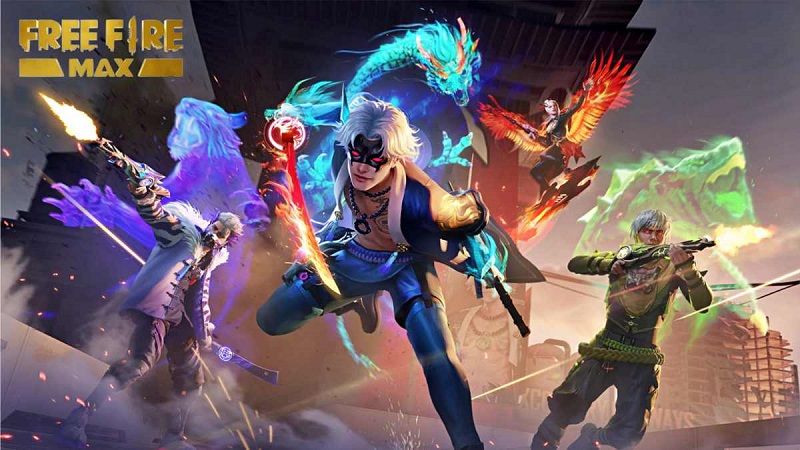
Understand the Match Flow
Every Free Fire Max match follows roughly the same rhythm.
Recognizing that rhythm is one of the fastest ways to improve because each phase demands a different mindset.
New players often play every minute exactly the same way.
Experienced players constantly adapt.
Knowing what should happen next helps you stay one step ahead instead of reacting too late.
Phase 1: The Plane Ride
The match begins before anyone fires a shot.
Choosing where to land is your first meaningful decision.
Many beginners automatically jump into the busiest locations because they assume better loot guarantees victory.
Sometimes it does.
More often, it guarantees an early trip back to the lobby.
Busy areas reward confident players who can loot quickly under pressure.
Quieter locations provide more time to collect equipment and understand your surroundings.
During your first week, survival is usually more valuable than excitement.
Learning the game while staying alive for ten minutes teaches far more than dying after thirty seconds.
Phase 2: Landing and Looting
Your first objective isn’t finding the strongest weapon.
It’s becoming combat-ready as quickly as possible.
A simple assault rifle with armor is usually more useful than spending another minute searching for the “perfect” loadout.
One habit separates experienced players almost immediately.
They stop looting once they’re prepared.
Beginners often continue searching every building long after they already have everything necessary.
Meanwhile, another squad is already rotating toward them.
Ask yourself one question regularly.
“If an enemy appeared right now, could I fight back?”
If the answer is yes, it’s probably time to move.
Phase 3: The First Engagement
Most early fights happen because two squads choose the same area.
These battles are often chaotic.
Not because players have amazing aim, but because everyone has incomplete equipment.
Avoid panicking.
Use nearby cover.
Reload before pushing.
Listen carefully.
The first enemy isn’t always alone.
Many beginners celebrate knocking one opponent only to get eliminated by the rest of the squad seconds later.
Patience wins surprisingly many early engagements.
Phase 4: Rotation
Once the safe zone begins shrinking, the game changes.
The map becomes smaller.
Encounters become more frequent.
Positioning becomes increasingly important.
Instead of asking,
“Where are the enemies?”
Start asking,
“Where will the enemies need to go next?”
Predicting movement is often easier than reacting to it.
Rotating early usually provides better cover, stronger positions, and fewer desperate fights near the edge of the safe zone.
Phase 5: Mid Game
This is where many matches quietly fall apart.
Players become overconfident after winning one or two fights.
They chase every gunshot.
Loot every crate.
Ignore the shrinking circle.
The strongest players often do the opposite.
They slow down.
They gather information.
They avoid unnecessary risks.
If another squad is fighting across the map, let them weaken each other first.
There’s rarely a prize for arriving at every battle before everyone else.
Phase 6: The Final Circle
The last few minutes reward preparation more than aggression.
Resources become extremely valuable.
Every medkit.
Every grenade.
Every Gloo Wall.
Every piece of armor.
One common mistake is exposing yourself too early simply because you spotted another player.
Sometimes the correct decision is doing absolutely nothing.
Wait.
Observe.
Let opponents reveal their positions.
Many victories come from taking the final fight on your own terms rather than firing the first shot you see.
Think About the Match as a Story
Every match tells a story.
It starts with uncertainty.
Builds through preparation.
Tests your decisions.
Rewards patience.
The players who consistently improve aren’t necessarily the fastest shooters.
They’re the ones who understand which decisions matter most during each stage of the match.
Once you can recognize these phases naturally, the game becomes much easier to read. Instead of feeling overwhelmed, you’ll start anticipating what comes next, and that’s when Free Fire Max begins to feel less like survival and more like strategy.
The next step is learning why most beginners keep repeating the same mistakes without realizing it. Fixing just a handful of those habits often leads to faster improvement than spending hours practicing aim.
Internal Link Placement (next article progression)
- Biggest Beginner Mistakes in Free Fire Max
- Best Landing Spots in Free Fire Max
- How to Improve Movement in Free Fire Max
- How to Control Recoil in Free Fire Max
- How to Hit More Headshots in Free Fire Max
The Biggest Beginner Mistakes
Most new players don’t struggle because they have bad aim. They struggle because they keep making the same decisions every match without realizing those decisions are getting them eliminated.
After watching friends start playing Free Fire Max over the years, one pattern always stands out. The first few matches usually look identical. Land somewhere crowded, spend too long looting, panic during the first fight, then wonder how another player seemed so much stronger.
The reality is far less dramatic.
Experienced players simply make fewer mistakes.
Fixing just a handful of common habits often improves your survival rate faster than spending hours in the training ground.
Landing Where Everyone Else Lands
Choosing a famous hot drop sounds exciting until you remember that dozens of experienced players have exactly the same idea.
Locations with premium loot also attract the strongest competition.
If your goal is improving rather than collecting highlight clips, there’s nothing wrong with landing in quieter areas.
Those extra two or three minutes give you time to:
- Find reliable weapons.
- Upgrade your armor.
- Learn the map layout.
- Practice movement under less pressure.
Once surviving becomes consistent, gradually challenge yourself with busier landing spots.
Many players mistake “playing safe” for “playing scared.”
They’re completely different.
Playing safe means choosing fights on your own terms.
Looting Until It’s Too Late
This is probably the most common beginner mistake.
There’s always one more building.
One more crate.
One more attachment.
One more weapon.
Then the safe zone starts moving, another squad arrives, and all those extra thirty seconds suddenly become very expensive.
A useful habit is asking yourself a simple question every minute:
“If someone attacked me right now, would I feel prepared?”
If the answer is yes, stop looting.
Professional players rarely carry perfect inventories. They simply recognize when “good enough” is actually good enough.
| Signs You Should Stop Looting | Why It Matters |
|---|---|
| You have two usable weapons | You’re combat-ready. |
| Armor is equipped | Additional searching has diminishing returns. |
| Healing items are available | Survival becomes more important than optimization. |
| Safe zone is shrinking | Rotation takes priority. |
Table 5. Indicators that it’s time to rotate instead of continuing to loot.
Fighting Every Enemy You See
One of the hardest lessons for beginners is accepting that not every fight deserves your attention.
Hearing gunfire creates an immediate urge to investigate.
Sometimes that’s the right decision.
Many times it’s exactly what another squad hopes you’ll do.
Think about the situation.
If two teams are already fighting, both sides are probably injured, distracted, and focused elsewhere.
Charging directly toward them often turns you into the easiest target on the map.
Experienced players frequently wait.
They gather information.
They let other squads weaken each other first.
Patience isn’t passive gameplay.
It’s calculated decision-making.
Standing Still During Gunfights
Standing still feels natural because accurate aiming seems easier.
Unfortunately, standing still also makes you an easy target.
Free Fire Max rewards constant movement.
Even small side steps force opponents to adjust their aim.
Jumping randomly isn’t the answer either.
Predictable jumping often makes your movement easier to read.
Instead, focus on controlled movement.
Strafe.
Use cover.
Change elevation when possible.
Break your opponent’s rhythm.
The best players don’t move constantly because it looks flashy.
They move because remaining stationary is usually the fastest way back to the lobby.
Ignoring Audio and the Minimap
Many beginners rely almost entirely on what they can see.
Experienced players often react before an enemy even appears on screen.
That’s because Free Fire Max constantly provides information through:
- Footstep indicators.
- Gunfire direction.
- Vehicle sounds.
- Teammate pings.
- Minimap activity.
The minimap is less of a map and more of an early warning system.
Learning to glance at it every few seconds eventually becomes second nature.
Saving Utility Items “For Later”
Beginners often finish matches carrying:
- Four Gloo Walls.
- Six grenades.
- Extra healing items.
The problem?
They die before using any of them.
Utility exists to create advantages.
If placing one Gloo Wall allows you to survive another fight, that wall has already done its job.
There’s no reward for ending a match with a full backpack.
Thinking Expensive Characters Solve Everything
Character skills matter.
They’re just not nearly as important as many players believe.
Buying a top-tier character won’t suddenly fix poor positioning, weak rotations, or reckless decision-making.
Good mechanics consistently outperform expensive loadouts.
Unlock new characters because they fit your playstyle, not because a tier list says they’re mandatory.
Internal Link Placement
→ Best Characters for Beginners
→ Best Character Combinations in Free Fire Max
Learn the Core Mechanics Before Chasing Kills
Winning more matches starts with mastering a few core mechanics.
These mechanics appear in every match regardless of your favorite weapon, preferred character, or playstyle.
Improving them creates long-term consistency instead of relying on lucky moments.
Movement Wins More Fights Than Aim
Ask experienced players what changed their gameplay the most.
Many won’t say “better aim.”
They’ll say “better movement.”
Movement determines:
- How difficult you are to hit.
- Which angles you can control.
- Whether you reach cover safely.
- How quickly you reposition after firing.
One habit separates beginners almost immediately.
New players move directly toward objectives.
Experienced players move with purpose.
Instead of running across an open road, they’ll hug walls, trees, rocks, and buildings even when nobody seems nearby.
That habit pays off because eventually someone is watching.
One personal lesson learned after hundreds of matches was that the safest route is rarely the shortest one.
Crossing an open field saves fifteen seconds.
Using nearby cover often saves the entire match.
Learn When to Sprint and When to Slow Down
Constant sprinting creates unnecessary problems.
Running loudly alerts nearby enemies.
It also makes sudden direction changes harder.
Walking occasionally isn’t about stealth alone.
It’s about maintaining control.
Approaching buildings carefully before entering often reveals footsteps that would otherwise go unnoticed.
The extra two seconds can completely change a fight.
Internal Link Placement
→ Complete Movement Guide for Free Fire Max
Recoil Control Is About Discipline
Many players believe recoil control means pulling down aggressively while firing.
That’s only part of the story.
Most recoil problems actually begin before the first bullet leaves the weapon.
Poor positioning.
Bad engagement distance.
Spraying at targets too far away.
Trying to win every fight with the same weapon.
These decisions create situations where recoil becomes much harder to manage.
Good recoil control starts by choosing fights your weapon is designed to win.
For example:
| Weapon Type | Ideal Engagement Range |
|---|---|
| SMG | Close range |
| Assault Rifle | Medium range |
| Shotgun | Very close range |
| Sniper Rifle | Long range |
| Marksman Rifle | Medium to long range |
Table 6. Matching weapon classes to their strongest engagement distances.
Even experienced players rarely spray an entire magazine unless absolutely necessary.
Instead, they fire controlled bursts whenever possible.
The result is higher accuracy and less wasted ammunition.
Internal Link Placement
→ How to Control Recoil in Free Fire Max
Headshots Come From Crosshair Placement, Not Luck
Watching highlight videos can make headshots seem effortless.
What those clips rarely show is the positioning that happened beforehand.
The biggest improvement most players can make isn’t flicking faster.
It’s keeping the crosshair at roughly head level before an enemy appears.
Imagine walking into a building.
If your crosshair is already aimed where an opponent’s head is likely to appear, you only need a tiny adjustment.
If your crosshair is pointed at the floor, every encounter begins with unnecessary movement.
This concept feels small until it becomes automatic.
Then suddenly headshots stop feeling random.
Another overlooked habit is resisting the urge to panic spray.
The first accurate bullets matter much more than the last twenty inaccurate ones.
Practice Consistency Instead of Highlight Plays
Social media is full of impossible flicks and one-tap eliminations.
Those moments are entertaining.
They’re also rare.
Consistently landing clean body shots while maintaining good positioning wins far more matches than chasing flashy plays.
The best players look impressive because they make simple mechanics look effortless.
Internal Link Placement
→ How to Hit More Headshots in Free Fire Max
Healing Is Part of Fighting
Many beginners think healing only happens after combat.
Experienced players treat healing as another combat mechanic.
Knowing when to heal is just as important as knowing when to shoot.
Heal too early and your opponent pushes aggressively.
Heal too late and you never get the chance.
One common mistake is trying to use a medkit in the open simply because there’s “almost enough time.”
There usually isn’t.
Always create safety first.
That might mean:
- Deploying a Gloo Wall.
- Moving behind solid cover.
- Entering a nearby building.
- Waiting until teammates apply pressure.
Healing without protection often turns you into the easiest target on the battlefield.

Protect Resources for the Final Circle
Healing items become increasingly valuable as the match progresses.
Early mistakes often create late-game problems.
Using three medkits after an unnecessary fight might leave you without enough healing during the final circle.
Resource management isn’t exciting, but it’s one of the quiet habits that separates experienced players from beginners.
Before engaging another squad, quickly ask yourself:
“Is this fight worth the healing items I might spend?”
Sometimes the correct answer is no.
Master the Fundamentals Before Looking for Advanced Tricks
It’s tempting to search for secret sensitivity settings, overpowered character combinations, or hidden movement exploits.
Those things can certainly provide small advantages.
They don’t replace strong fundamentals.
A player who understands movement, recoil, positioning, crosshair placement, and healing will improve with every update because those skills never become outdated.
Everything else builds on top of them.
The next step is choosing the right weapons, understanding character abilities, and learning how Ranked mode changes the way every decision matters.
Natural Internal Link Placement
Continue your progression with these beginner-friendly guides:
- Best Weapons in Free Fire Max
- Best Assault Rifles for Beginners
- Best SMGs in Free Fire Max
- Best Characters for Beginners
- How Ranked Mode Works
- Clash Squad Beginner Guide
Which Weapons Should Beginners Use?
The best weapon in Free Fire Max isn’t necessarily the one with the highest damage. It’s the one you can use consistently under pressure.
One mistake nearly every beginner makes is chasing rare weapons while ignoring how difficult they are to control. Finding a powerful sniper rifle feels exciting, but if every fight happens inside buildings, that weapon becomes more of a burden than an advantage.
Early on, consistency beats firepower.
Choose weapons that forgive mistakes, reload quickly, and perform well in multiple situations. As your confidence grows, you can start experimenting with more specialized loadouts.
Start With Versatile Weapons
If you’re still learning recoil control and positioning, stick with weapons that work in most fights.
Assault rifles are usually the safest choice because they perform well at medium range and remain useful in almost every phase of the match.
Pairing an assault rifle with an SMG or shotgun also gives you answers for both open areas and close-quarters combat.
Avoid carrying two weapons that fill the same role.
For example, two sniper rifles may look impressive in your inventory, but they’ll leave you almost helpless once an enemy rushes your position.
| Weapon Class | Beginner Friendly | Best Use |
|---|---|---|
| Assault Rifle | ⭐⭐⭐⭐⭐ | All-around combat |
| SMG | ⭐⭐⭐⭐☆ | Buildings and close fights |
| Shotgun | ⭐⭐⭐☆☆ | Aggressive close-range pushes |
| Marksman Rifle | ⭐⭐☆☆☆ | Medium to long-range engagements |
| Sniper Rifle | ⭐☆☆☆☆ | Advanced positioning and precision |
Table 7. Recommended weapon classes for new players.
Note: Difficulty doesn’t mean a weapon is weak. It reflects how forgiving it is when you’re still learning core mechanics.
Don’t Build Your Loadout Around Damage Alone
Weapon stats only tell part of the story.
A gun with slightly lower damage but easier recoil often produces better results because you’ll land more shots.
Many experienced players would rather have a familiar weapon than the statistically strongest one.
Confidence matters.
If you’ve spent twenty matches learning how one assault rifle behaves, switching to another simply because it appears higher on a tier list isn’t always the smartest decision.
Instead, learn one weapon from each category well.
That knowledge carries over into every future update.
Attachments Matter More Than Beginners Realize
Attachments don’t transform weak weapons into overpowered ones, but they make reliable weapons even more dependable.
Prioritize upgrades that improve consistency rather than chasing every attachment you find.
In most matches, these upgrades provide the biggest practical difference:
- Better magazines reduce reload pressure.
- Improved scopes help with medium-range accuracy.
- Stocks increase weapon stability.
- Muzzles can improve recoil and bullet control.
If your backpack is already full, don’t risk your positioning just to search for the “perfect” attachment.
Winning fights always comes before completing your dream loadout.
Natural Internal Link Placement
If you want detailed recommendations for every weapon class, continue with:
- Best Weapons in Free Fire Max
- Best Assault Rifles Ranked
- Best SMGs for Close Combat
- Best Shotguns in Free Fire Max
- Best Sniper Rifles Guide
Which Characters Should Beginners Unlock First?
Characters influence your playstyle, but they don’t define your skill level.
It’s easy to believe that buying the latest meta character will instantly improve your results. In reality, good positioning and smart decision-making still determine most fights.
Character skills should support the way you naturally play, not force you into someone else’s strategy.
Focus on Easy-to-Use Abilities
Some character abilities require excellent timing.
Others quietly provide value throughout every match.
Beginners usually benefit more from passive or straightforward abilities because they reduce the number of decisions you need to make during combat.
Instead of worrying about activating complicated skills in the middle of a firefight, you can focus on surviving, rotating, and improving your aim.
The fewer mechanics competing for your attention, the faster you’ll improve.
Build Around Your Playstyle
After twenty or thirty matches, you’ll probably notice patterns.
Some players naturally enjoy:
- Playing aggressively and pushing fights.
- Supporting teammates from behind.
- Rotating early and avoiding unnecessary battles.
- Holding defensive positions until the final circle.
There’s no universally “correct” style.
The best character is simply the one that enhances how you already enjoy playing.
Trying to copy professional tournament lineups before understanding your own strengths usually creates more confusion than improvement.
Don’t Ignore Team Synergy
If you mostly play Squad mode, your character doesn’t need to do everything.
Strong teams often combine abilities that complement each other.
One player provides mobility.
Another focuses on healing.
Someone else offers defensive support.
Instead of asking,
“Which character is the strongest?”
Ask,
“What does my team already have?”
That small change in thinking leads to much stronger team compositions over time.
| Player Type | Character Priority |
|---|---|
| Solo Beginner | Survival and mobility |
| Casual Squad Player | Balanced utility |
| Aggressive Player | Offensive abilities |
| Support Player | Healing and defensive skills |
Table 8. Choosing character abilities based on preferred playstyle.
Natural Internal Link Placement
For complete rankings and recommended combinations, read:
- Best Characters for Beginners
- Best Character Combinations in Free Fire Max
- Character Tier List (2026)
How Ranked Mode Changes Everything
Ranked mode isn’t simply the same game with tougher opponents.
It rewards an entirely different mindset.
Many beginners jump into Ranked expecting faster improvement because stronger opponents should teach better habits.
Sometimes they do.
More often, new players develop bad habits because they’re constantly under pressure without understanding why they’re losing.
Treat Ranked as a test of consistency rather than raw skill.
Survival Becomes More Valuable
Public matches often encourage experimentation.
Ranked punishes unnecessary risks.
Every poor rotation, careless push, or greedy loot decision becomes more expensive.
That doesn’t mean playing passively.
It means making smarter decisions.
One elimination followed by a Top 5 finish is often worth much more than five reckless eliminations followed by an early exit.
Experienced Ranked players constantly balance risk and reward.
Positioning Beats Hero Plays
Highlight videos often show incredible one-versus-four clutches.
Those moments happen.
They simply aren’t how most Ranked games are won.
The majority of victories come from:
- Rotating before the safe zone forces you.
- Holding strong cover.
- Keeping teammates alive.
- Managing healing resources.
- Choosing favorable engagements.
Those decisions rarely appear in montages because they’re not flashy.
They’re simply effective.
Communication Matters More Than Aim
If you play Squad Ranked regularly, communication becomes another mechanic.
Calling enemy positions.
Sharing resources.
Warning teammates about footsteps.
Planning rotations.
These small pieces of information often matter more than landing one spectacular headshot.
Even simple communication dramatically improves survival.
Learn Before You Grind
One mistake many beginners make is treating Ranked as practice.
It’s actually better viewed as an exam.
Practice in regular matches.
Experiment with new weapons.
Try different characters.
Then bring what you’ve learned into Ranked once those mechanics feel natural.
You’ll climb faster and enjoy the experience much more.
Natural Internal Link Placement
To improve your Ranked performance, continue with:
- Complete Ranked Guide
- Clash Squad Beginner Guide
- Best Solo Ranked Strategy
- Best Squad Strategy
Your Beginner Progression Roadmap
Trying to master everything at once usually slows progress.
Free Fire Max has too many systems for that approach to work.
The fastest improvement comes from learning one layer at a time.
Think about your first month as building a foundation rather than chasing victories.
| Stage | Primary Focus | Ignore for Now |
|---|---|---|
| First 10 Matches | Controls, movement, survival | Character meta |
| 10–30 Matches | Positioning, rotations, weapon familiarity | Advanced sensitivity tweaks |
| 30–60 Matches | Character abilities, Ranked basics | Complex team strategies |
| 60+ Matches | Team coordination, advanced mechanics, meta adaptation | Constantly changing loadouts |
Table 9. A realistic learning roadmap for new Free Fire Max players.
Notice how aiming isn’t listed as the first priority.
That’s intentional.
A player with average aim and excellent decision-making consistently outperforms someone with strong mechanics but poor game sense.
Measure Improvement Differently
Winning every match isn’t a realistic expectation.
Instead, look for signs that you’re becoming a smarter player.
For example:
- You rotate before the safe zone forces you.
- You stop looting earlier.
- You survive more opening fights.
- You use Gloo Walls proactively instead of reactively.
- You recognize dangerous situations before they happen.
Those habits usually appear long before your win rate starts climbing.
Ironically, once they become automatic, victories begin arriving naturally.
You’re Ready for the Next Step
At this point, you should understand what matters most during your first weeks in Free Fire Max.
You don’t need perfect aim.
You don’t need every premium character.
You don’t need legendary weapons every match.
You need reliable fundamentals.
Movement.
Positioning.
Weapon familiarity.
Smart decision-making.
Everything else builds on top of those skills.
As your confidence grows, you can start refining individual areas in much greater detail. That’s where specialized guides become valuable because they’ll help you optimize mechanics you’ve already learned instead of overwhelming you with information too early.
Continue Learning
If you’re ready to improve beyond the basics, these guides are the best next steps:
- Best Sensitivity Settings for Free Fire Max
- Best HUD Layout
- Best Weapons Tier List
- Best Characters Guide
- Movement Guide
- Recoil Control Guide
- Headshot Guide
- Ranked Guide
- Best Landing Spots
- Free Fire Max Redeem Codes
Your First 7-Day Improvement Plan
Improving at Free Fire Max doesn’t require marathon gaming sessions. Playing ten unfocused matches every day often teaches less than playing three matches with a specific goal.
One of the biggest differences between beginners who improve quickly and those who stay stuck is intentional practice. Every session should answer one simple question:
“What am I trying to get better at today?”
If the answer is “everything,” you’ll probably improve at nothing.
Day 1: Learn the Controls
Forget about winning.
Spend your first day becoming comfortable with movement, aiming, looting, switching weapons, and using Gloo Walls without looking at your buttons.
The fewer times you need to glance at your HUD, the more attention you can give to the battlefield.
Today’s goal
- Customize your HUD.
- Test sensitivity.
- Play several matches without changing settings repeatedly.
Recommended guides
→ Best HUD Layout for Free Fire Max
→ Best Sensitivity Settings
Day 2: Master Landing and Looting
Good matches usually begin with good landings.
Instead of dropping into the busiest city, practice choosing locations where you have enough time to loot without immediate pressure.
Pay attention to how long it takes before you’re fully equipped.
Most beginners spend far too much time searching.
Today’s goal
- Learn two reliable landing spots.
- Stop looting once you’re combat-ready.
- Reach the first safe zone comfortably.
Recommended guides
→ Best Landing Spots
Day 3: Focus on Movement
Movement changes everything.
Many players notice bigger improvements from better positioning than from better aim.
Challenge yourself to never stand still during fights.
Move between cover.
Peek instead of exposing your whole body.
Think about where you’ll go before the shooting starts.
By the end of the day, movement should begin feeling automatic.
Recommended guides
→ Complete Movement Guide
Day 4: Build Better Aim
Today isn’t about chasing highlight-worthy headshots.
It’s about consistency.
Practice keeping your crosshair near chest or head level while moving through buildings.
Use the training ground before entering real matches.
Focus on landing your first few bullets accurately instead of spraying entire magazines.
Today’s goal
- Improve crosshair placement.
- Practice recoil control.
- Stay calm during close-range fights.
Recommended guides
→ Headshot Guide
→ Recoil Control Guide
Day 5: Understand Positioning
Positioning is often invisible when you’re watching gameplay, yet it’s responsible for countless victories.
Ask yourself before every fight:
“If someone shoots me right now, where is my nearest cover?”
That question alone changes how you move across the map.
Good positioning makes average aim look much better.
Poor positioning makes excellent aim almost useless.
Today’s goal
- Fight near cover.
- Rotate earlier.
- Avoid unnecessary open areas.
Day 6: Experiment With Characters and Weapons
Once your fundamentals feel comfortable, start exploring different combinations.
This isn’t the time to copy professional tournament builds.
Instead, discover what feels natural.
Some players enjoy aggressive SMGs.
Others perform much better with assault rifles and patient positioning.
Your preferred playstyle matters more than current trends.
| Experiment | What to Observe |
|---|---|
| Different assault rifles | Which recoil feels easiest to control? |
| SMG vs Shotgun | Which close-range weapon fits your reactions? |
| Character abilities | Which skills support your style naturally? |
| Squad vs Solo | Where do you perform more consistently? |
Table 10. Questions to ask while experimenting with equipment and characters.
Recommended guides
→ Best Weapons Guide
→ Best Characters Guide
Day 7: Play Ranked With Purpose
After six days focused on learning, Ranked becomes a useful benchmark.
Don’t judge success by rank points alone.
Instead, review your decisions.
Did you rotate early?
Did you panic during fights?
Did you waste healing items?
Did you chase unnecessary eliminations?
Every Ranked match becomes valuable if you leave with one lesson.
By the end of your first week, you should feel noticeably calmer during combat than you did on Day One.
That confidence matters far more than your current rank.
What Should You Learn Next?
The basics only scratch the surface.
Once you’re surviving consistently and winning occasional fights, it’s time to build specialized knowledge.
The easiest mistake at this stage is consuming random tips from dozens of sources.
A structured learning path produces much faster improvement.
Follow the topics below in roughly this order.
Improve Your Mechanical Skill
These guides help refine the fundamentals you’ve already learned.
- Best Sensitivity Settings
- Best HUD Layout
- Movement Guide
- Headshot Guide
- Recoil Control Guide
Learn the Meta
Once mechanics feel natural, understanding the current meta becomes worthwhile.
Focus on:
- Strong weapon choices.
- Character balance.
- Team compositions.
- Patch changes.
Recommended guides
- Weapon Tier List
- Best Assault Rifles
- Best SMGs
- Best Shotguns
- Best Characters
- Character Combination Guide
Become a Better Strategist
Winning consistently requires more than mechanics.
Study:
- Rotations.
- Map control.
- Final circle positioning.
- Squad communication.
- Resource management.
Recommended guides
- Best Landing Spots
- Maps Guide
- Solo Ranked Guide
- Squad Strategy Guide
- Ranked Mode Guide
Stay Up to Date
Free Fire Max evolves regularly.
Characters receive adjustments.
Weapons get balanced.
Events introduce temporary mechanics.
Keeping up with updates prevents your knowledge from becoming outdated.
Recommended guides
- Latest OB Update
- Patch Notes
- Events Guide
- Redeem Codes Today
Frequently Asked Questions
Is Free Fire Max beginner-friendly?
Yes. The controls are easy to learn, but mastering positioning, movement, and decision-making takes time. New players who focus on fundamentals improve much faster than those chasing advanced tricks.
What’s the best weapon for beginners?
Assault rifles are generally the safest choice because they perform well in most situations while offering manageable recoil.
Related guide: Best Weapons in Free Fire Max
Which character should I unlock first?
Choose a character with simple, reliable abilities that match your preferred playstyle instead of following every online tier list.
Related guide: Best Characters for Beginners
Should I play Solo or Squad first?
Solo teaches personal survival and positioning, while Squad helps you learn teamwork and communication. Both modes improve different skills.
Is sensitivity more important than aim?
No.
Sensitivity supports your aim.
Good crosshair placement, movement, and positioning remain more important than copying someone else’s settings.
How can I survive longer?
Land safely, stop over-looting, rotate early, and avoid unnecessary fights.
Most beginners lose because of poor decisions rather than poor aim.
Do I need expensive characters to win?
No.
Premium characters provide useful abilities, but strong fundamentals consistently matter more.
How often should I practice in the training ground?
Even ten minutes before playing can noticeably improve your recoil control and crosshair placement.
When should I start playing Ranked?
Once you understand landing, looting, positioning, and basic gunfights.
Ranked should test your skills rather than teach your fundamentals.
What’s the fastest way to improve?
Focus on one skill at a time.
Trying to improve everything simultaneously usually slows your progress.
Are Gloo Walls really that important?
Absolutely.
Experienced players use Gloo Walls proactively to create cover, revive teammates, and control fights rather than waiting until they’re almost eliminated.
Is Free Fire Max still worth playing in 2026?
Yes.
The game continues receiving new characters, seasonal events, weapon balancing, and regular updates, making it accessible for newcomers while remaining competitive for long-time players.
Conclusion
Free Fire Max rewards smart decisions far more than perfect mechanics.
The players who improve the fastest aren’t necessarily the ones with incredible aim or expensive characters. They’re the ones who build strong habits from the beginning.
Learning when to rotate.
Choosing sensible fights.
Using cover naturally.
Managing resources.
Understanding the flow of every match.
Those skills never become outdated, regardless of how the meta changes.
If there’s one takeaway from this guide, it’s this: don’t rush your improvement.
Master one fundamental before moving to the next. Every small habit compounds over time, and after a few weeks, you’ll notice that situations which once felt chaotic now feel predictable.
That’s the moment Free Fire Max becomes far more enjoyable.
Continue Your Free Fire Max Journey
If this guide helped you get started, these articles will take your gameplay to the next level.
Beginner Essentials
- Best HUD Layout for Free Fire Max
- Best Sensitivity Settings
- Best Graphics Settings
- Biggest Beginner Mistakes
- Best Landing Spots
Combat Improvement
- Best Weapons in Free Fire Max
- Best Assault Rifles
- Best SMGs
- Best Shotguns
- Best Sniper Rifles
- Movement Guide
- Headshot Guide
- Recoil Control Guide
Characters & Strategy
- Best Characters for Beginners
- Character Tier List
- Best Character Combinations
- Maps Guide
- Solo Ranked Guide
- Squad Strategy Guide
- Complete Ranked Guide
Latest Updates
- Latest OB Update
- Patch Notes
- Events Guide
- Redeem Codes Today
Following these guides in order creates a natural progression from beginner to confident Ranked player while helping you build a deeper understanding of every major system in Free Fire Max.